Aerial Bunched Cables (ABC)
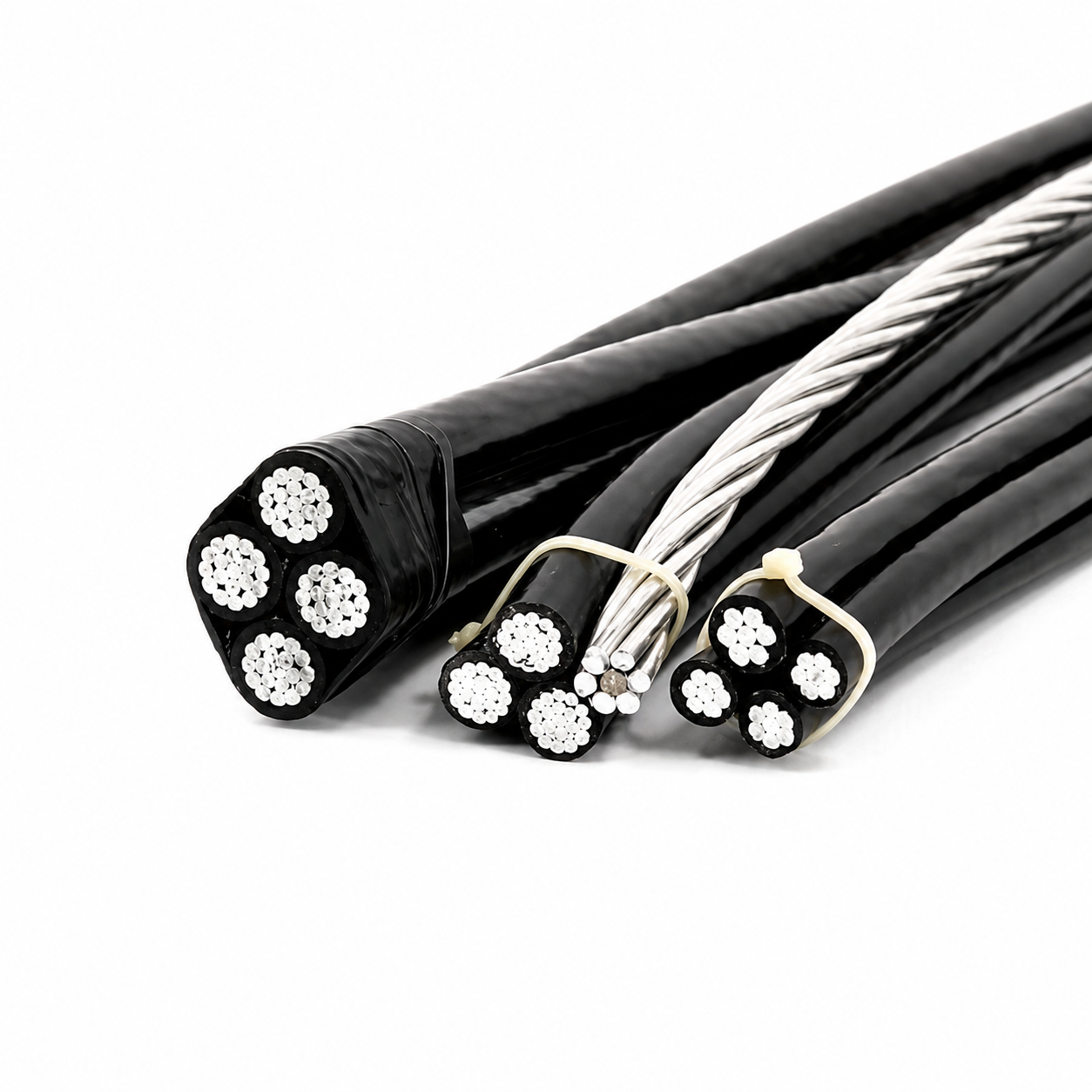
Aerial Bunched Cables
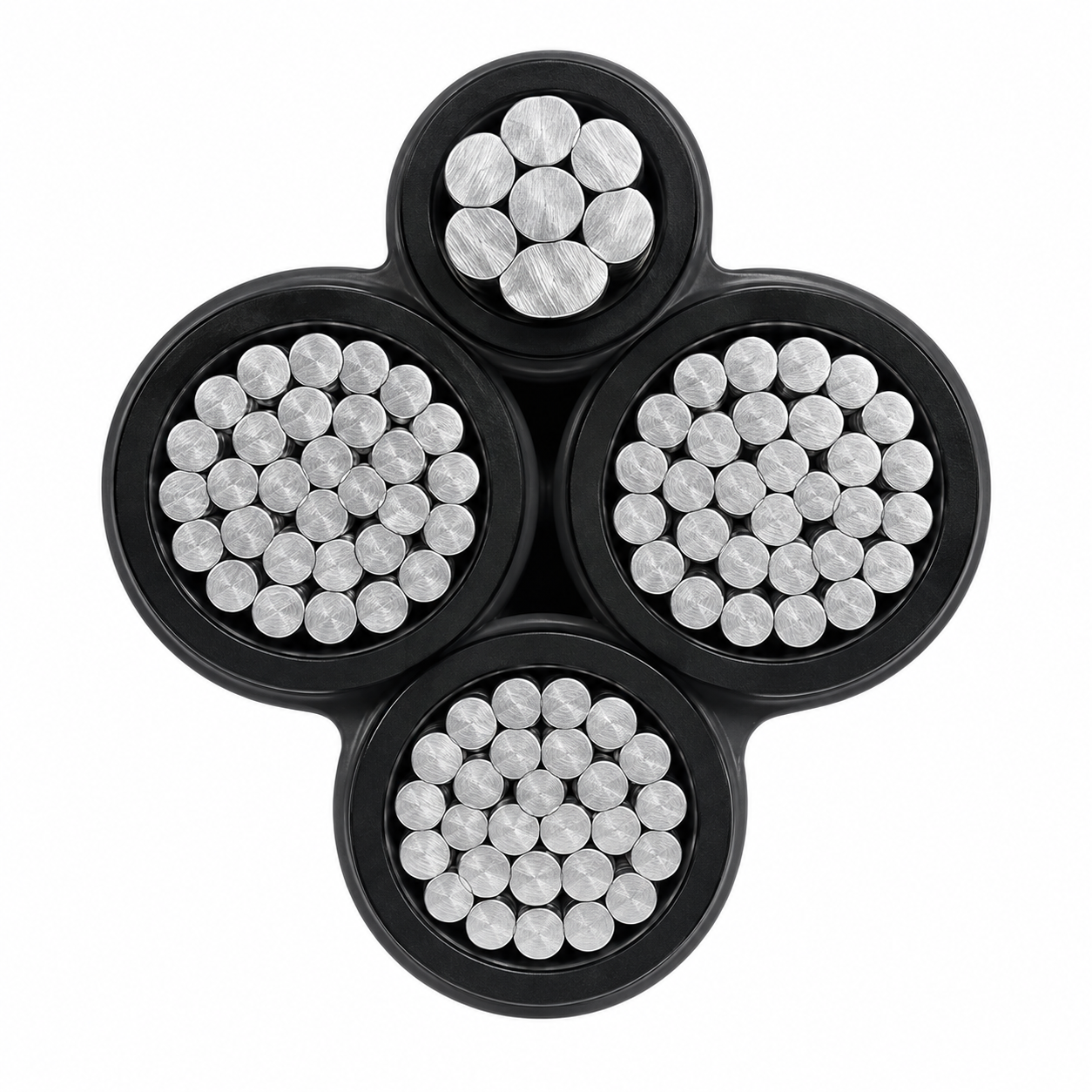
Aerial Bunched Cables
INTRODUCTION
Pymen Cables manufactures XLPE insulated LT Aerial Bunched Cables to IS 14255:1995, for overhead distribution systems up to and including 1100 V.
An Aerial Bunched Cable is a complete overhead line in a single assembly. Insulated aluminium phase conductors, with a neutral and street-lighting cores where required, are twisted around a high-tensile aluminium alloy messenger that carries the mechanical load of the span. The bundle is strung directly onto existing distribution poles using standard hardware, replacing bare conductor lines with an insulated system along the same route.
CONSTRUCTION
- XLPE insulated aluminium phase conductors, twisted around a bare or insulated messenger to form a single compact aerial assembly.
- Messenger made of stranded aluminium alloy (AAAC), which carries the full mechanical tension of the span.
- Insulated street-lighting conductors laid up in the same bundle where required — one or two, depending on the circuit.
- Black XLPE insulation, stabilised against ultraviolet radiation and direct sunlight for long outdoor service life.
- Phase conductors: 16, 25, 35, 50, 70 and 95 sq. mm; messenger: 25, 35, 50 and 70 sq. mm; street-lighting conductor: 16 sq. mm.
- With the messenger carrying the mechanical tension, the phase conductors operate at a continuous temperature of 90°C.
MATERIALS & STANDARDS
- Aluminium conductors conforming to IS 8130:1984.
- Stranded aluminium alloy messenger conforming to IS 398 (Part 4); galvanised steel wire messenger conforming to IS 398 (Part 2) where specified.
- XLPE insulation conforming to IS 7098 (Part 1); PE insulation conforming to IS 6474 where specified.
- Cables supplied on drums conforming to IS 10418.
- Manufactured, tested, and despatched in accordance with IS 14255:1995, with test certificates accompanying every consignment.
WHY AERIAL BUNCHED CABLE?
- Insulated cores make unauthorised tapping difficult, directly reducing distribution losses.
- Faults and interruptions occur several times more often on bare overhead lines than on ABC.
- No phase-to-phase clashing in high winds, resulting in fewer short circuits and overvoltages during thunderstorms.
- Reduced risk of electric shock from incidental contact, making the line safer to work near and safer for people living beneath it.
- Narrower corridor requirements and significantly less tree trimming, since the bundle can safely pass close to branches.
- Fewer supports and accessories, along with faster stringing on site.
- Street lighting can be incorporated into the same run at very little additional cost.
- Lower installation, maintenance, and operating costs over the life of the line.
APPLICATIONS
- Rural electrification and village distribution feeders.
- Urban and semi-urban LT distribution in congested colonies and narrow lanes.
- Hilly, forested, and heavily wooded routes.
- Coastal and industrial areas where salt-laden or polluted air can affect bare conductors.
- Service connections and street-lighting circuits along the same overhead run.
- Replacement and reconductoring of existing bare LT overhead lines along the same pole route.
- Temporary distribution at construction sites, plantations, mines, and project townships.